Depreciation: What It Is and How to Measure It
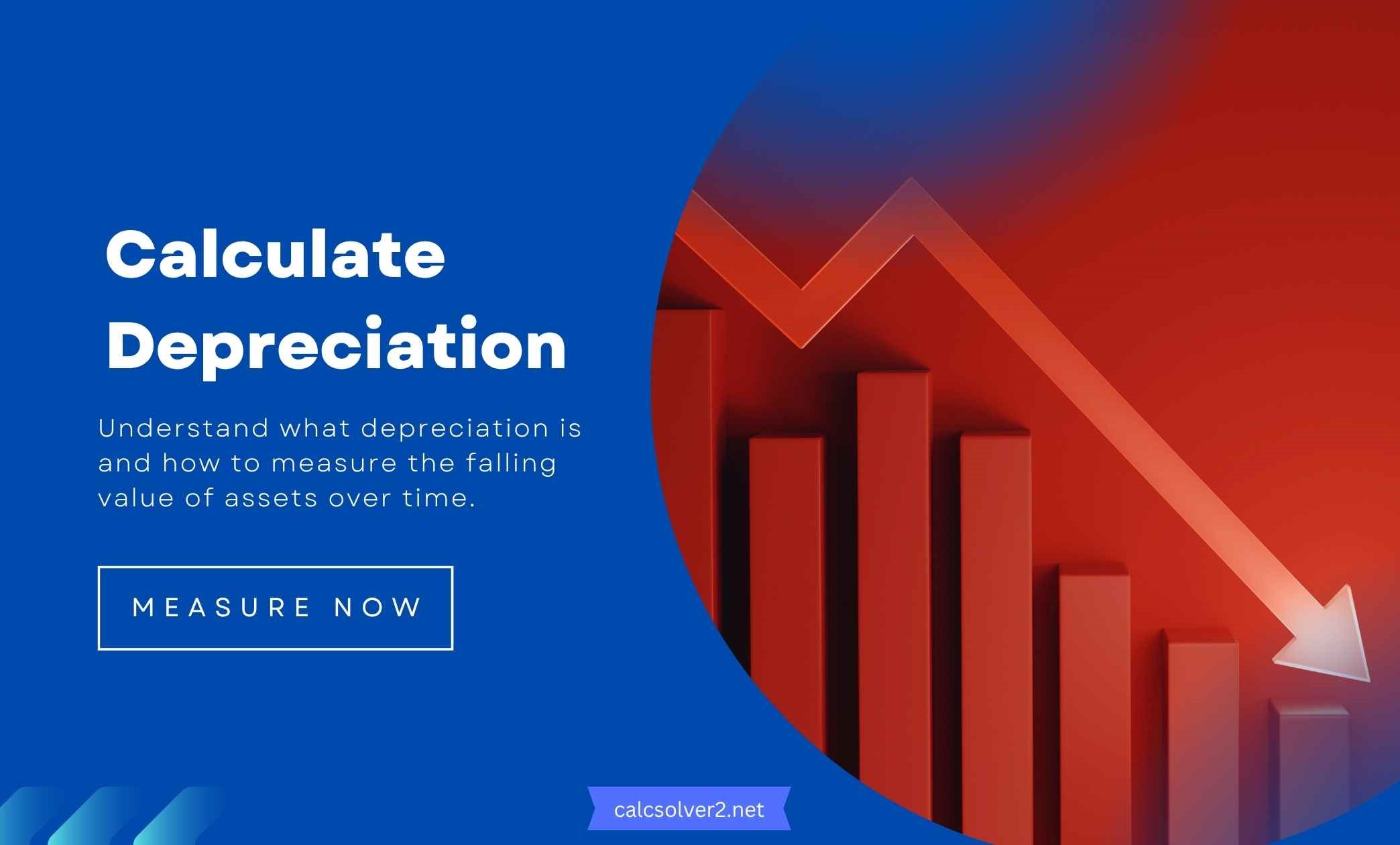
When a business purchases a delivery van, computer server, or heavy industrial machinery, that asset does not hold its full value forever. Over time, physical wear and tear, technological obsolescence, and age erode the value of equipment. In accounting and personal finance, depreciation is the method used to distribute the cost of a physical asset over its expected useful life. When you need to calculate annual write-offs or asset schedules quickly, an online solver provides immediate schedules and exact numbers.
Depreciation allows companies to match the expense of an expensive asset with the revenues it generates over multiple years, adhering to the matching principle of financial accounting.
Core Concepts in Measuring Depreciation
Before calculating depreciation, you must establish three key values:
- Initial Asset Cost: The total purchase price, including shipping, installation, and setup expenses required to make the asset operational.
- Salvage Value (Residual Value): The estimated dollar amount the asset can be sold for at the end of its useful life.
- Useful Life: The estimated number of years or units of production the asset is expected to remain productive before being retired.
The Straight Line Depreciation Method
The straight-line method is the most popular and straightforward depreciation technique because it spreads the cost of the asset completely evenly across each year of its useful life.
The mathematical formula is: Annual Depreciation = (Initial Cost – Salvage Value) / Useful Life in Years
Suppose a design firm purchases a large format printer for ,000. They anticipate using it for 5 years and estimate its salvage value at ,000 at the end of that period.
Subtract the salvage value from initial cost: ,000 minus ,000 equals a depreciable base of ,000. Now divide by the 5-year useful life: 10,000 divided by 5 equals ,000 per year. The company records an annual depreciation expense of ,000 for each of the five years.
The Double Declining Balance Method
Certain assets, like personal computers and automobiles, lose value much faster in their early years of operation than in later years. The double-declining balance (DDB) method is an accelerated depreciation system that writes off larger amounts during the initial years.
Also read: Understanding Return on Investment ROI in Practical Finance
You may also like: How to Calculate EMI for Personal Loans Simply
To use double declining depreciation, first find the straight-line rate (100% divided by useful life) and double it. For a 5-year asset, the straight-line rate is 20 percent, making the double-declining rate 40 percent. In year one, 40 percent is multiplied against the full ,000 book value, producing a first-year deduction of ,800.
| Year | Starting Book Value | Straight-Line Expense | Accumulated Depreciation | Ending Book Value |
|---|---|---|---|---|
| Year 1 | ,000 | ,000 | ,000 | ,000 |
| Year 2 | ,000 | ,000 | ,000 | ,000 |
| Year 3 | ,000 | ,000 | ,000 | ,000 |
| Year 4 | ,000 | ,000 | ,000 | ,000 |
| Year 5 | ,000 | ,000 | ,000 | ,000 (Salvage Value) |
Tax Implications and Cash Flow Benefits
A non-obvious benefit of depreciation is that it is a non-cash expense. Although a business does not write a check each year for depreciation, the expense reduces reported net taxable income on financial tax returns.
For example, if a firm has ,000 in operating income and claims ,000 in equipment depreciation, its taxable income is reduced to ,000. At a corporate tax rate of 21 percent, the ,000 depreciation deduction shields ,150 in hard cash that the business can reinvest in operations. Accelerated depreciation schedules, like Section 179 or bonus depreciation in modern tax codes, allow businesses to write off qualifying equipment even faster.
The Units of Production Depreciation Method
While straight-line and declining-balance methods measure depreciation based on the passage of calendar years, certain assets wear out based on actual physical usage rather than time. The Units of Production method calculates depreciation based on output, such as miles driven for delivery vehicles or operational hours for manufacturing presses.
The formula divides the depreciable cost (cost minus salvage value) by the estimated total lifetime production units to find a fixed per-unit rate. For example, if a delivery van costs ,000 with a ,000 salvage value and an estimated lifespan of 150,000 miles, the depreciation rate is (,000 – ,000) / 150,000 = .20 per mile. If the business drives the van 25,000 miles in year one, the recorded depreciation expense is exactly ,000. This method provides the most accurate matching of expenses with revenue for vehicle fleets and heavy machinery.
Book Value Versus Market Value
It is vital to recognize that an asset’s book value on a balance sheet is an accounting convention, not necessarily what someone would pay for it on the open market. Market value is determined by supply and demand, while book value is simply original cost minus accumulated depreciation.
Common Mistakes in Depreciation
Avoid these frequent accounting errors:
- Depreciating land: Land does not suffer wear and tear or decay. Land cannot be depreciated under tax or accounting laws.
- Depreciating below salvage value: Regardless of the method used, an asset cannot be depreciated below its estimated salvage value.
- Neglecting installation costs: The depreciable basis must include all expenses incurred to get the asset ready for service.
Mastering depreciation enables accurate financial reporting and smarter capital investment decisions.