How to Convert Centimeters to Inches Accurately
In our interconnected global world, measuring units can differ depending on where a product is designed or sold. Most countries use the metric system (centimeters and meters), while the United States relies heavily on the imperial system (inches and feet). Whether you are buying clothes online, checking screen sizes for televisions, buying tools, or reading construction blueprints, knowing how to convert centimeters to inches is an essential everyday skill. When you need fast conversions across multiple dimensions, an online CalcSolver converts units instantly with zero rounding error.
Both centimeters and inches measure linear distance. By international agreement established in 1959, the inch is formally defined in terms of metric units: exactly 1 inch equals 2.54 centimeters.
The Mathematical Conversion Formula
Because 1 inch equals 2.54 centimeters, converting centimeters into inches requires dividing by 2.54:
Inches = Centimeters / 2.54
Equivalently, you can multiply centimeters by 0.3937 (since 1 divided by 2.54 is approximately 0.393701):
Inches = Centimeters x 0.3937
Suppose you want to convert 30 centimeters to inches. Divide 30 by 2.54: 30 / 2.54 equals approximately 11.81 inches. If you use the multiplication method: 30 x 0.3937 equals 11.81 inches. Both methods yield the exact same result.
A Quick Mental Math Approximation Shortcut
When you are shopping in a store and do not have a calculator handy, performing division by 2.54 in your head can be clumsy. Fortunately, there is a fast mental shortcut that gets you within one percent of the exact answer:
Also read: How to Find the Perimeter of Any Shape Easily
You may also like: How to Find the Surface Area of a Box Easily
- Multiply the centimeters by 4.
- Drop the last zero or shift the decimal point one place to the left (multiplying by 0.4).
- For example, convert 50 cm: 50 multiplied by 4 is 200. Shifting the decimal gives 20 inches.
- The exact calculation: 50 divided by 2.54 is 19.685 inches. The quick mental trick is off by less than a third of an inch, making it ideal for quick estimates.
| Centimeters (cm) | Division by 2.54 | Exact Decimal Inches | Nearest Common Fraction | Common Context |
|---|---|---|---|---|
| 2.54 cm | 2.54 / 2.54 | 1.000 in | 1 in | Standard conversion base |
| 10 cm | 10 / 2.54 | 3.937 in | 3 15/16 in | Width of a smartphone |
| 30.48 cm | 30.48 / 2.54 | 12.000 in | 12 in (1 ft) | Standard school ruler |
| 175 cm | 175 / 2.54 | 68.898 in | 5 ft 9 in | Average adult human height |
Screen Displays and Television Sizing Standards
Even in countries that operate entirely on the metric system, consumer electronics like smartphone displays, laptop panels, computer monitors, and televisions are internationally marketed in inches measured diagonally across opposite corners.
If you measure a television screen diagonally and find it measures 140 centimeters, converting to inches determines the retail display class: 140 divided by 2.54 equals 55.12 inches, which corresponds directly to a standard 55-inch television. Understanding this metric-to-imperial relationship ensures you buy televisions and monitor arms that fit your entertainment console accurately.
Reading Imperial Rulers and Sixteenth Inch Marks
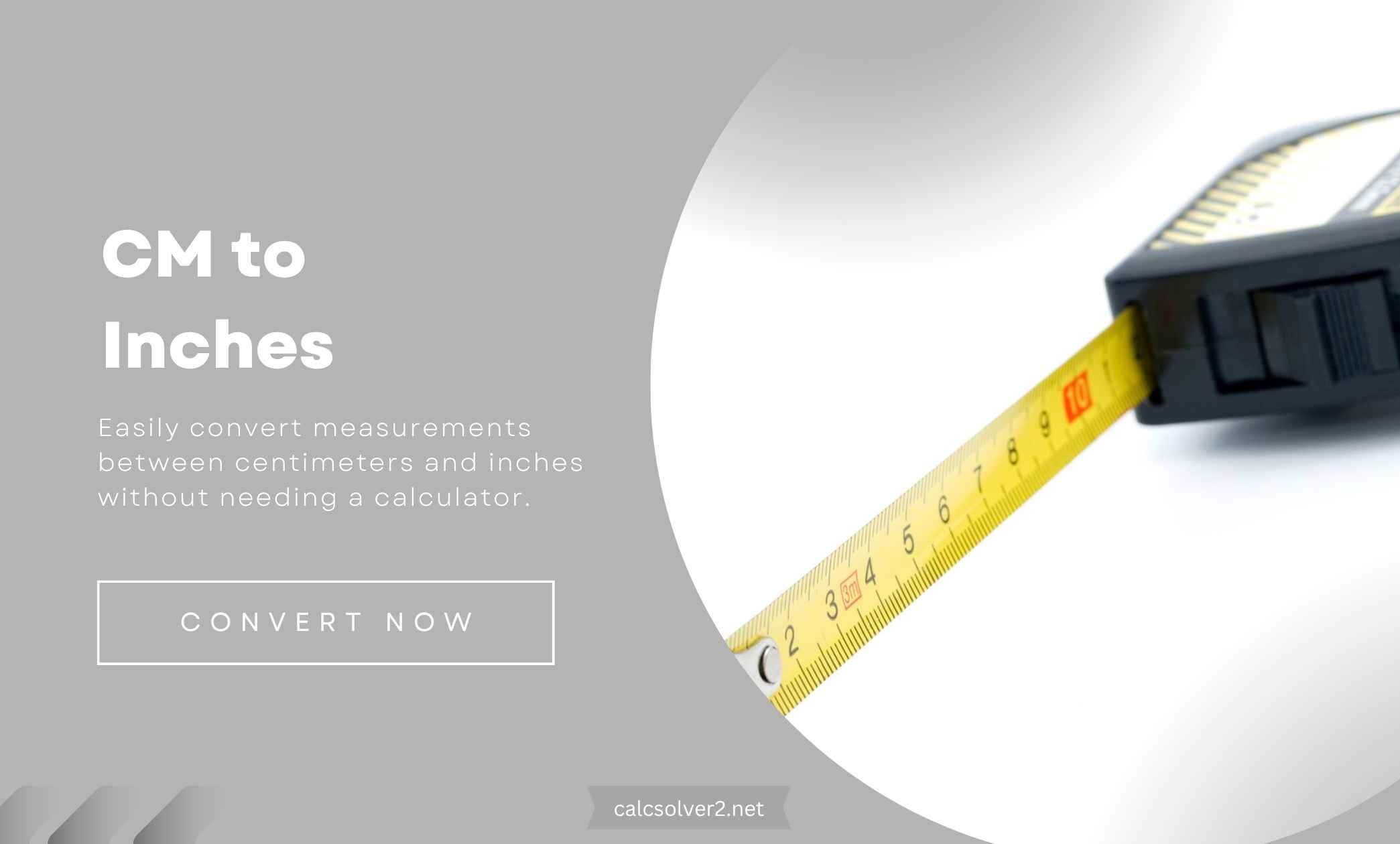
When you convert centimeters into inches for carpentry or craft projects, decimal answers like 7.375 inches are not marked on standard tape measures. Imperial measuring tapes and rulers divide each inch into fractional binary increments: halves (1/2), quarters (1/4), eighths (1/8), and sixteenths (1/16).
To convert a decimal inch into a tape measure reading, multiply the decimal fraction by 16. For example, in 7.375 inches, take the decimal portion 0.375 and multiply by 16: 0.375 times 16 equals 6. This means 7.375 inches is identical to 7 and 6/16 inches, which reduces to 7 3/8 inches. Learning how to translate decimal inch conversions into physical ruler marks ensures your woodworking and home renovation cuts fit together with millimeter precision.
Converting Centimeters to Feet and Inches
When measuring human height or room dimensions, expressing answers as 68.9 inches is less common than stating feet and inches:
- Convert total centimeters to decimal inches by dividing by 2.54 (for 180 cm: 180 / 2.54 = 70.87 inches).
- Divide total inches by 12 to find whole feet: 70.87 / 12 = 5.9 feet (5 whole feet).
- Multiply 5 feet by 12 to find base inches: 5 x 12 = 60 inches.
- Subtract 60 from 70.87 to find remaining inches: 70.87 – 60 = 10.87 (approx 11 inches).
- Therefore, 180 cm is approximately 5 feet 11 inches.
Common Conversion Pitfalls
Avoid these frequent unit conversion mistakes:
- Multiplying by 2.54 instead of dividing: To convert cm to inches, you must divide. Multiplying 10 cm by 2.54 yields 25.4, which is backwards. Remember: an inch is longer than a centimeter, so the number of inches must always be smaller than the number of centimeters.
- Rounding 2.54 to 2.5 in precision work: While 2.5 works for rough mental estimates, in woodworking or manufacturing, dropping the 0.04 creates compounding measurement errors.
Remembering the 2.54 factor guarantees you can convert between metric centimeters and imperial inches effortlessly.